


-8962bde3-077b-485e-ba45-cd814dc48fb8.jpg)
A balanced living room usually comes down to proportion, spacing, and how different pieces relate to one another within the room.
Some living rooms immediately feel easy to sit in.
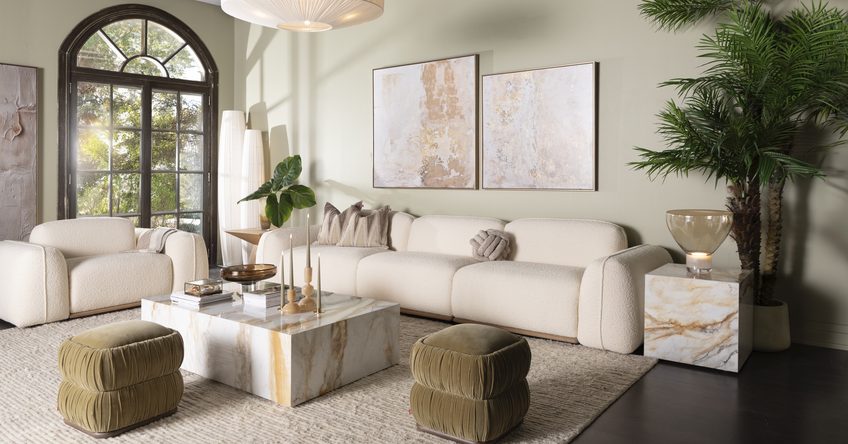
Not necessarily because they are larger or filled with more furniture, but because the proportions feel balanced. The sofa does not overpower the room, the tables sit at the right height, and there is enough variation between pieces to keep the space feeling comfortable and natural.
Balance in a living room rarely comes from matching everything perfectly. It is more about how the pieces work together and how naturally they sit alongside one another within the room.
This guide looks at a few of the elements that can make all the difference.
1. Varying Heights and Shapes
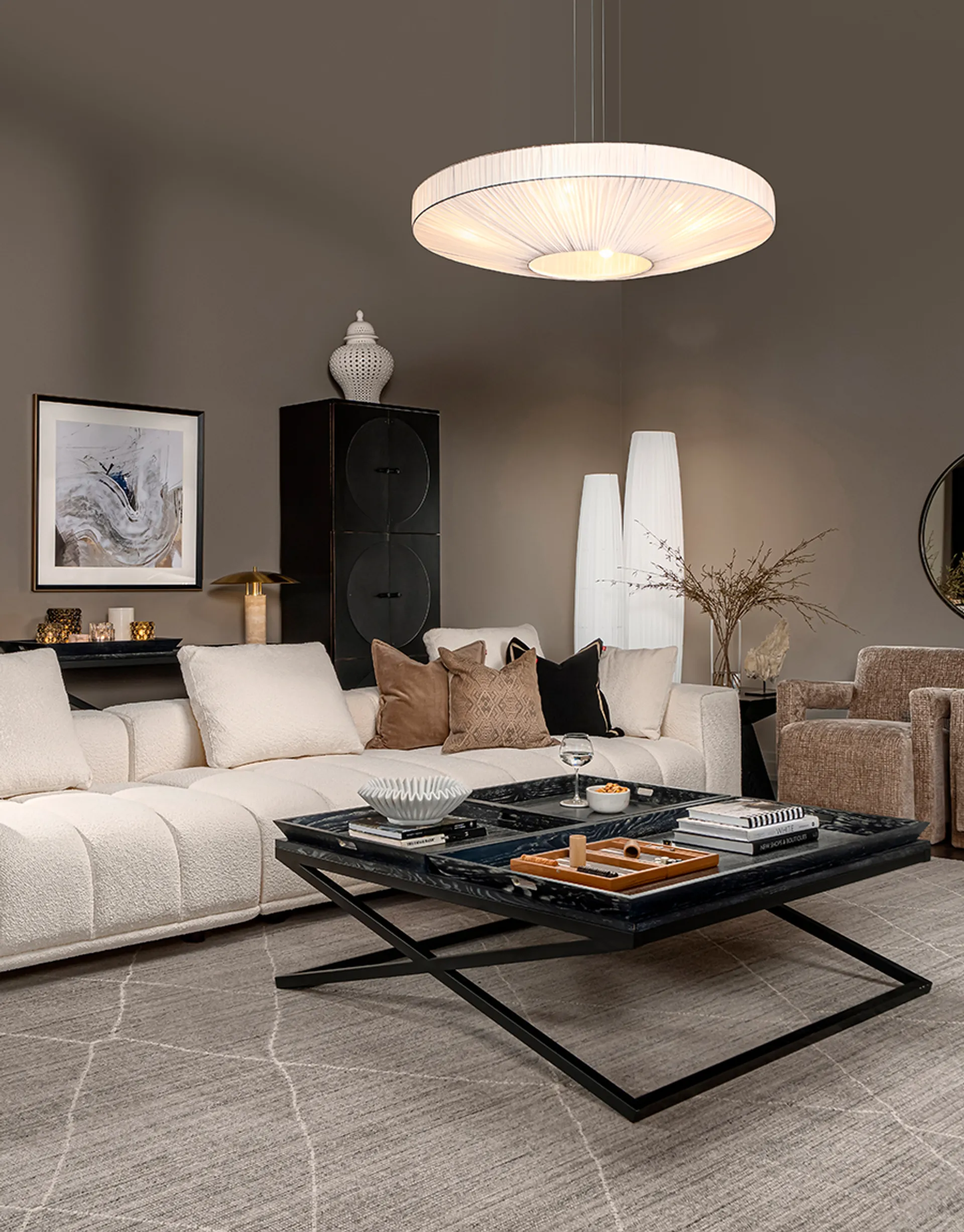
When every piece sits at the same height or follows the same shape, a room can start to feel flat. Mixing lower and taller elements creates variation and gives the eye somewhere to travel.
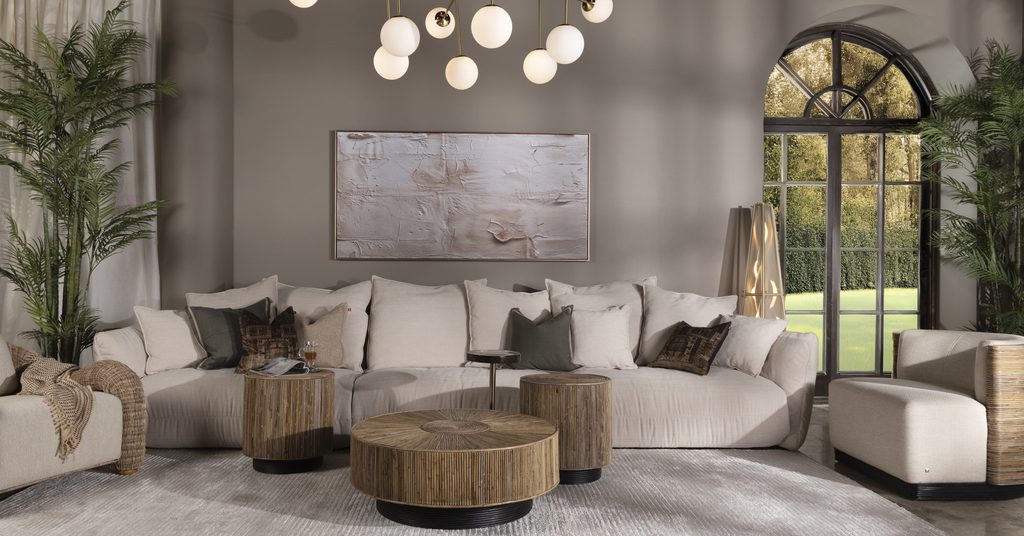
A low coffee table alongside a sofa, taller floor lamp and plant creates different levels within the room, while curved living room chairs or a round side table can soften the straighter lines of larger furniture.
Sometimes, a small change in height or shape is all it takes to make the whole arrangement feel more balanced.
2. Leaving Space Between Pieces
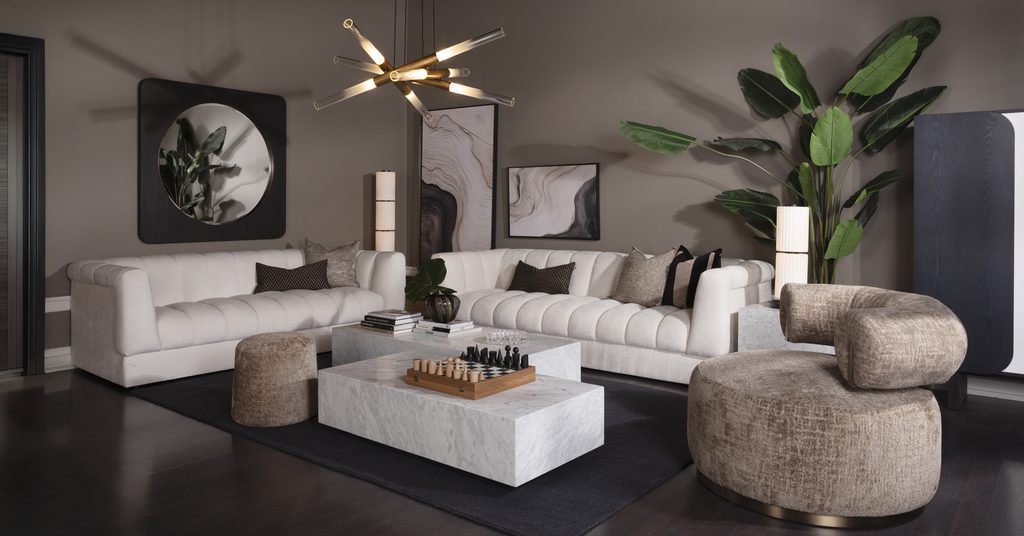
A room generally feels more comfortable when the furniture has some space around it, rather than everything being pushed tightly together.
This can be particularly important in open-plan layouts, where the living area may flow directly into a dining space or hallway. Leaving enough room between different areas helps them feel connected without everything blending into one.
Even a little breathing room between a sofa and side table, or between seating and a walkway, can make a room feel considered rather than simply filled.
3. Balancing Larger and Smaller Pieces
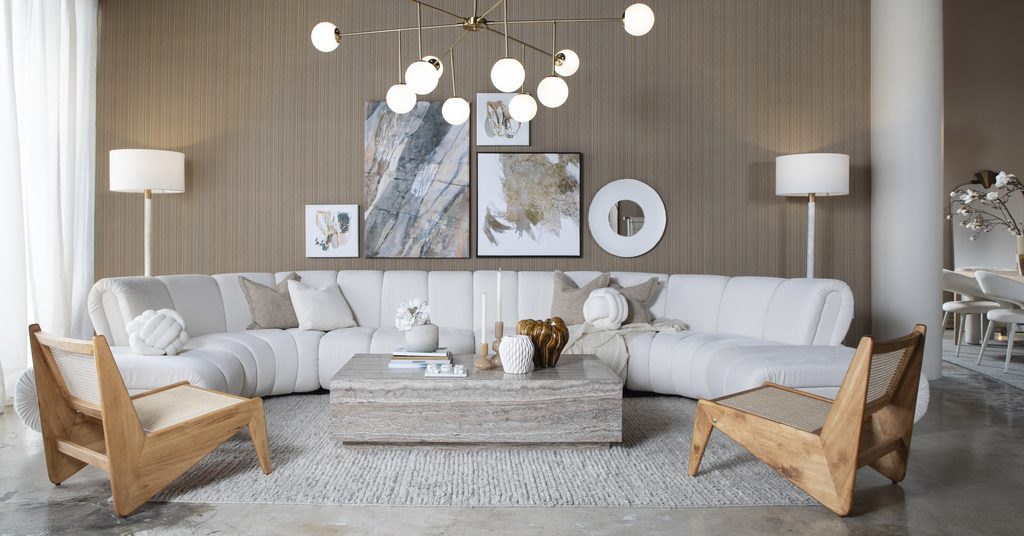
A substantial sofa does not necessarily need equally substantial furniture around it. In fact, balancing larger pieces with lighter or smaller ones can help the whole room feel more open.
A large modular sofa might sit comfortably alongside a slim side table and lighter living room chair, while a lower-profile coffee table can give a deeper sofa a little more visual space.
Modular living room furniture can be particularly useful here, allowing the seating arrangement to work with the proportions of the room rather than the other way around.
4. Letting One Piece Lead
Most living rooms naturally have one piece that draws the eye first. Often it is the sofa, but it could just as easily be a distinctive armchair, coffee table, rug or another piece with a strong shape, colour or finish.
Once you know what that piece is, everything else does not need to compete with it.
Letting the surrounding furniture play a quieter supporting role gives the room a clearer focal point while still leaving space for different pieces to bring their own character.
5. Avoiding a Room That Feels Too Matched
Balance does not mean everything has to match.
In fact, a little variation in material, shape or finish can make a living room feel far more natural. Try an upholstered sofa with a wood or rattan side table, living room chairs with a different silhouette to the sofa, or a slightly different tone or texture somewhere in the mix.
The pieces do not need to match to belong together. They simply need enough in common to feel like they were meant to share the same room.
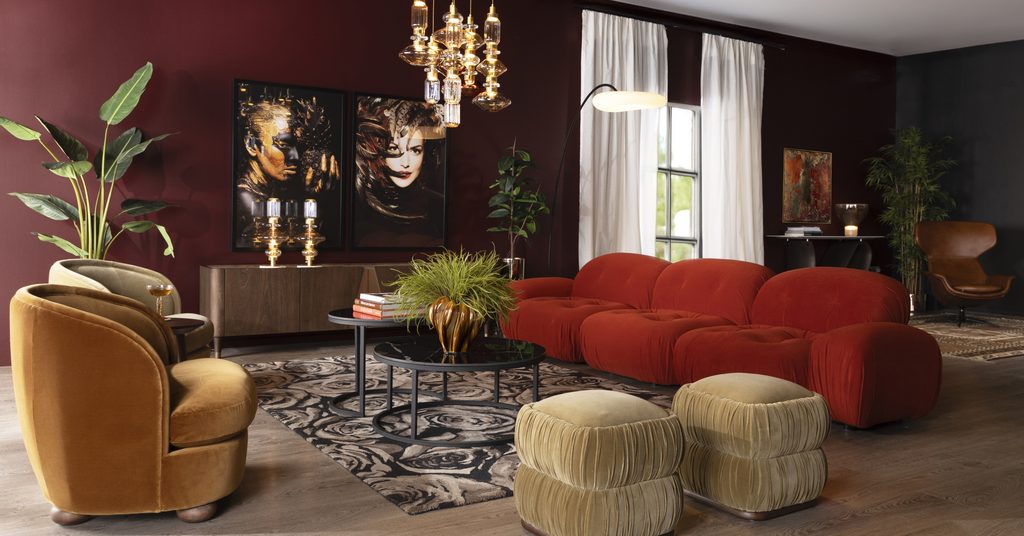
Explore THE One collection of living room furniture in Dubai, from modular sofas and living room chairs to side tables and supporting pieces, designed to work together naturally within the space.
FAQs
1. How do I make a living room feel more balanced?
Start with the biggest pieces and look at what is happening around them. If you have a substantial sofa, lighter supporting furniture can help balance its scale, while varying heights, shapes and textures keeps the room from feeling too flat or uniform.
2. What size side table should I use next to a sofa?
As a general guide, a side table should sit reasonably close to the height of the sofa arm so it is comfortable to reach. Scale matters too: a compact chair may only need a small table beside it, while a larger sofa can comfortably take something more substantial.
3. Should living room furniture all match?
No. A living room can feel more interesting when different pieces complement one another rather than matching exactly. Look for connections in colour, material, proportion or texture to bring everything together while still allowing individual pieces to have their own character.
4. How much space should be left around living room furniture?
Enough to move comfortably around the room without having to navigate around furniture. Main walkways should feel clear, while sofas, chairs and tables should sit close enough to one another to feel connected and be practical to use.
5. Is modular furniture a good choice for a small living room?
Yes, particularly when flexibility matters. Modular living room furniture lets you choose a configuration that suits the available space and gives you the option to adapt the arrangement if your room or seating needs change.